
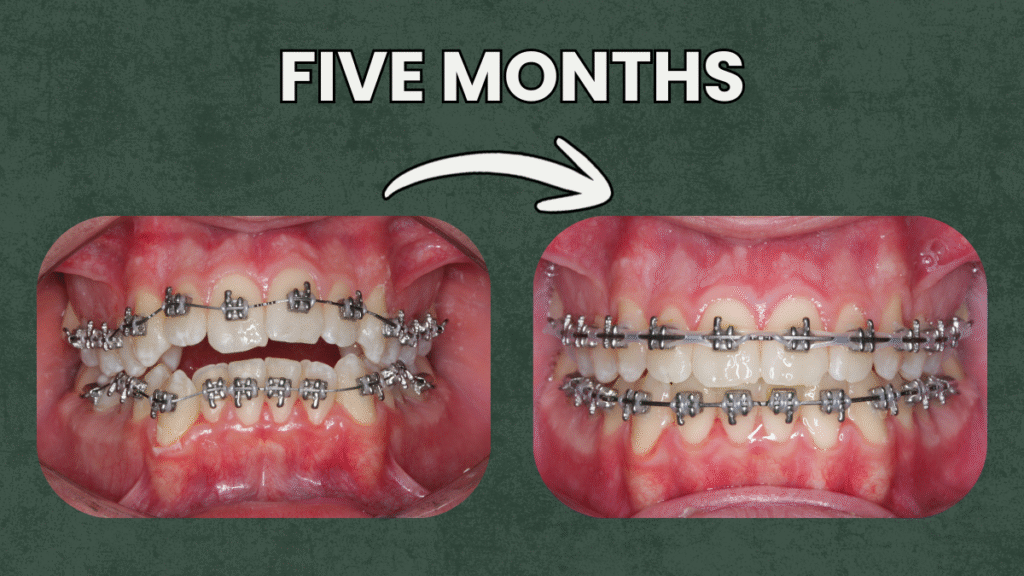
To most patients, orthodontic treatment appears simple: braces or aligners gradually straighten teeth over time. But what’s happening beneath the surface is a remarkable biological process guided by physics and biomechanics.
Teeth don’t slide through bone like objects moving through air. Instead, they move through a process called bone remodeling.
When a controlled force is applied to a tooth:
- Bone on one side breaks down
- New bone forms on the opposite side
- The tooth slowly shifts position
This delicate process depends heavily on force control.
If forces are poorly directed or inconsistent, tooth movement becomes inefficient and unpredictable. That is why orthodontic treatment requires careful planning and ongoing adjustments.
Small differences in force magnitude or direction can produce very different outcomes. Even slight variations in bracket placement or wire stiffness can influence how teeth respond.
This is what many people don’t realize: orthodontics is not simply about applying force — it is about applying the right force, in the right place, at the right time.
As technology advances, our ability to understand and control these forces continues to improve. Digital planning, advanced imaging, and computational modeling now allow orthodontists to approach treatment with unprecedented precision.
The science behind tooth movement is complex, but its goal is simple: guiding teeth safely and efficiently into healthy, stable positions.
Want to learn our treatments? Learn more HERE.