
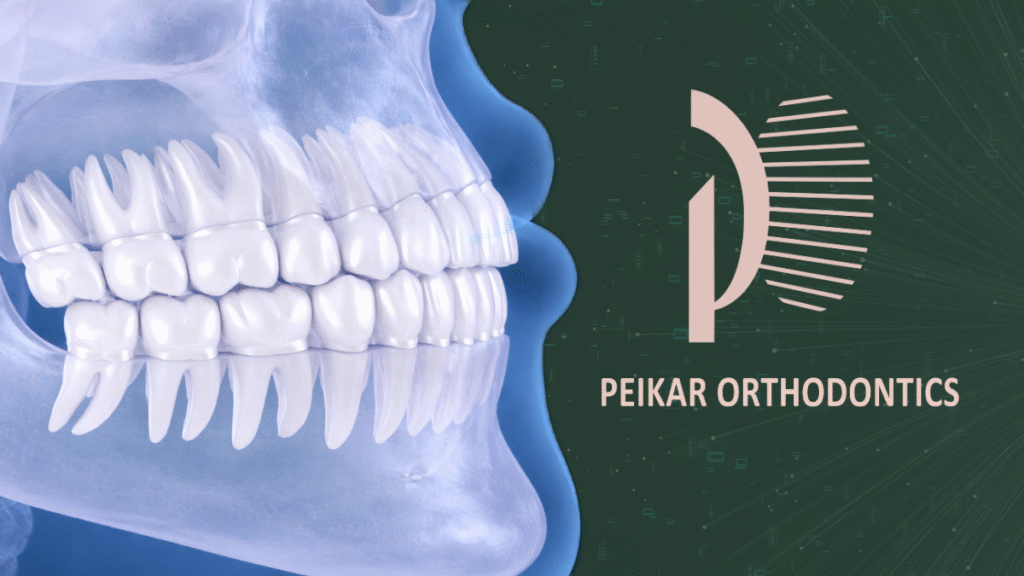
Most people think orthodontics is simply about straightening teeth. But behind every successful orthodontic treatment lies something much deeper: engineering inside the human body.
Orthodontics is fundamentally about controlling forces and guiding biological response. Every tooth moves because a carefully applied mechanical force stimulates bone remodeling. Too little force, and nothing happens. Too much force, and the biology can be harmed. The direction, magnitude, and timing of forces must all be precisely balanced.
This is why orthodontics is not just a clinical art — it is a form of applied biomechanics.
My background in physics and engineering shaped how I see orthodontic treatment. Instead of viewing appliances as static tools, I began to see them as force-delivery systems interacting with living tissue. Every bracket position, every wire shape, and every adjustment affects how forces travel through teeth and bone.
This perspective also highlights a key limitation of traditional orthodontics: standardized appliances are designed around averages, not individuals. Yet each patient has unique anatomy, bone density, and biological response.
When engineering principles are applied to individualized treatment planning, orthodontics moves closer to its true potential: delivering controlled, optimized forces tailored to each patient. At its core, orthodontics is not simply about moving teeth — it is about designing precise mechanical systems that work harmoniously with biology.
Get your own individualized treatment plan HERE.